
 Rackmount PC
 Embedded Computing
 Industrial Portable Computers
 Rugged Tablets
 Rugged Laptop
 Industrial Panel PC
 Rugged Handheld
 Advantech Industrial PC
Application and advantages of industrial computers in industrial coal-fired boiler control systems

With the continuous development of automation technology, industrial computers are increasingly used in industrial coal-fired boiler control systems. This article will explore in depth the important role of industrial computers in industrial coal-fired boiler control systems and the many advantages they bring, so as to provide a useful reference for enterprises to improve production efficiency and reduce operating costs.
Table of Contents
- 1. Key Functions of Industrial Computers in Boiler Control Systems
- 1.1 Real-Time Data Collection and Intelligent Analysis
- 1.2 Advanced Control Algorithms for System Stability
- 1.3 Remote Monitoring and Operational Efficiency
- 1.4 Safety and Alarm Management
- 1.5 Energy Optimization and Production Efficiency
- 1.6 Hardware and Software Adaptability for Industrial Environments
- 2. Advantages of industrial computers in industrial coal-fired boiler control systems
- 3. Conclusions
- 4. FAQ
Key Functions of Industrial Computers in Boiler Control Systems
1. Real-Time Data Collection and Intelligent Analysis
The industrial computer can collect various parameters during the operation of the boiler in real time, such as furnace temperature, flue gas oxygen content, water flow, etc., and transmit these data to the host computer or monitoring center for remote monitoring and data analysis by staff. This allows technical teams to:

- Monitor boiler performance in real time.
- Adjust combustion parameters to improve fuel efficiency.
- Predict load fluctuations and automatically adjust control strategies to maintain stable steam output.
Using real-time data and intelligent analysis, industrial computer cases ensure that all internal components remain protected while providing reliable operation for critical industrial processes.
2. Advanced Control Algorithms for System Stability
Coal-fired boilers often use three-element control systems, which simultaneously manage drum water level, steam flow, and feedwater flow. Industrial computers implement control algorithms, such as PID and fuzzy logic, to:
- Maintain water level and steam pressure precisely, even under changing load conditions.
- Optimize combustion and feedwater flow for maximum efficiency.
- Reduce risks related to pressure or water level fluctuations.
3. Remote Monitoring and Operational Efficiency
Based on the collected data and the preset control algorithm, the industrial computer can accurately calculate the control quantity and adjust the boiler's combustion state, water supply flow, etc. in real time through the actuator to ensure that the boiler operates at the optimal working point. Key advantages include:
- Centralized supervision of multiple boilers from a control room or headquarters.
- Real-time alerts for abnormal conditions.
- Historical data logging for performance analysis, maintenance planning, and operational optimization.
With proper industrial computer cases, these systems can be installed in challenging industrial environments while ensuring long-term reliability.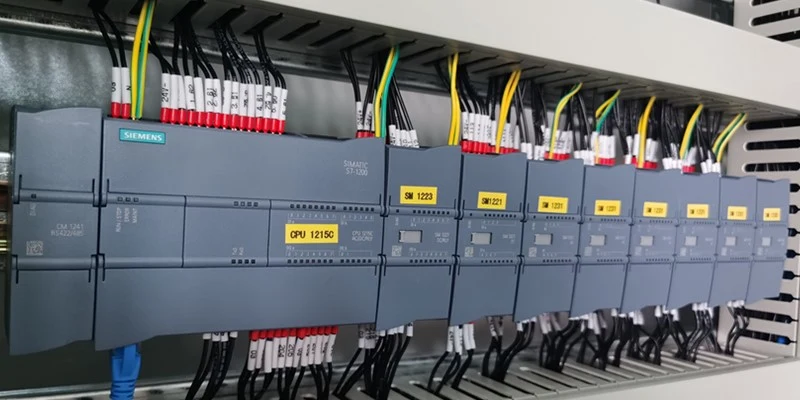
4. Safety and Alarm Management
When the boiler has an abnormal situation, such as overtemperature, overpressure, water shortage, etc., the industrial computer will immediately issue an alarm signal and take corresponding protective measures to prevent the accident from expanding. At the same time, it will record the fault information to provide a basis for subsequent fault analysis and maintenance. When abnormal conditions occur, such as overpressure, low water level, or unstable combustion, the system can:
- Trigger automatic protective actions.
- Notify operators immediately.
- Record fault data for later maintenance and troubleshooting.
Industrial computer cases help protect hardware from environmental hazards, maintaining consistent safety and operational integrity.
5. Energy Optimization and Production Efficiency
Through the analysis and processing of boiler operation data, the industrial computer can discover potential energy-saving space and put forward optimization suggestions to achieve comprehensive management of the boiler operation process, including operation records, maintenance reminders and other functions. By precisely controlling combustion and feedwater processes, industrial computers:
- Reduce fuel consumption while maintaining target steam output.
- Improve production efficiency and product quality for industries requiring continuous steam.
- Integrate with enterprise energy management systems for a complete view of energy usage and emissions.
These features help operations and engineering teams save costs and run more sustainable production processes.
6. Hardware and Software Adaptability for Industrial Environments
Industrial computers used in boiler control systems are designed to handle harsh industrial environments:
- Wide operating temperature ranges (-0°C to 60°C or more) ensure stable performance.
- Resistant to vibration, dust, and humidity.
- Compatible with multiple operating systems (Windows XP/7/10) and industrial communication protocols (Ethernet/IP, Modbus, Profibus).
Proper industrial computer cases further enhance durability, making installation and maintenance easier for engineers and technicians.
Advantages of industrial computers in industrial coal-fired boiler control systems
Industrial computers provide practical benefits for production, operations, and engineering staff:
- Production management: The comprehensive management and data analysis functions of industrial computers help enterprises achieve refined management of boiler operation processes and improve production efficiency and management level.
- Maintenance and engineering: Remote diagnostics and historical data logging improve preventive maintenance efficiency. Through remote monitoring and fault diagnosis functions, industrial computers can promptly detect and handle potential problems, reducing the frequency and cost of on-site inspections and maintenance.
- Energy optimization: Real-time control and intelligent algorithms reduce fuel use and emissions. Industrial computers use advanced control algorithms and high-speed processors to achieve precise control of boiler operating conditions, thereby improving boiler thermal efficiency and energy utilization.
- Safety monitoring: Automatic alarms and interlocks protect personnel and equipment, ensuring compliance with industrial safety standards.
- Enhance system stability: Industrial computers have strong anti-interference capabilities and self-diagnosis functions, and can operate stably in harsh industrial environments, reducing production interruptions caused by equipment failures.
By understanding these operational scenarios, industrial computer solutions can be customized for large-scale steam or heat production facilities.

Conclusion
If you are looking for reliable customized industrial computer solutions for your boiler control systems, our team is ready to support you. Contact us today to discuss your project requirements and discover how we can provide a solution tailored to your industry needs.
FAQ
Q1: Can industrial computers support remote monitoring and centralized management?
Yes. Industrial computers can be integrated into centralized boiler control systems, allowing engineers and operations teams to remotely monitor multiple boilers, receive real-time alerts, and analyze performance data from a control room or headquarters. This helps improve both operational efficiency and safety management.
Q2: What factors should be considered when selecting industrial computers for boiler control systems?
Key factors include computing performance, expansion slots for I/O cards, compatibility with industrial communication protocols, wide-temperature operation, and durable industrial computer cases that protect equipment in harsh environments. These ensure stable and long-term operation in demanding industrial conditions.
Q3: How can industrial computers help with energy optimization and compliance?
Industrial computers enable precise control of combustion and feedwater processes, which reduces fuel consumption and emissions. They also provide data logging for environmental compliance and help align production with corporate energy efficiency and sustainability goals.
Q4: Are industrial computers in boiler control systems scalable for future upgrades?
Yes. Many industrial computer cases support modular expansion with PCI/PCIe slots, multiple serial ports, and Ethernet interfaces. This allows plants to upgrade their systems when new sensors, control modules, or monitoring requirements are added.
Q5: Can industrial computers integrate with enterprise-level energy management systems?
Yes. Industrial computers can connect boiler control data with enterprise energy management platforms. This helps managers analyze energy usage, optimize load distribution, and align production with sustainability and compliance goals.


LET'S TALK ABOUT YOUR PROJECTS
- sinsmarttech@gmail.com
-
3F, Block A, Future Research & Innovation Park, Yuhang District, Hangzhou, Zhejiang, China
Our experts will solve them in no time.