
 Rackmount PC
 Embedded Computing
 Industrial Portable Computers
 Rugged Tablets
 Rugged Laptop
 Industrial Panel PC
 Rugged Handheld
 Advantech Industrial PC
The Advantages of a Fanless Industrial PC
2024-08-13 16:29:49
In today's challenging industrial contexts, dependability, performance, and resilience are not optional. This is where fanless industrial PCs stand out. Unlike regular computers, these rugged computing devices run without mechanical fans and instead rely on passive cooling technology. This design choice eliminates one of the most typical failure spots in traditional systems—moving parts—making them perfect for mission-critical operations in manufacturing, automation, and harsh environmental conditions.
A fanless industrial PC is designed for use in industrial automation, edge computing, smart factories, and embedded applications. They are built to survive vibration, dust, humidity, and high or low temperatures thanks to solid-state components, strong enclosures, and a wide thermal tolerance. These systems are often IP65 or IP67 rated, providing dustproof and water-resistant protection for use in hazardous or outdoor environments.
Some of the defining features of a fanless industrial computer include:
-
Passive heat dissipation through aluminum or metal chassis
-
Wide input voltage support
-
Shock and vibration resistance
-
Low power consumption hardware
-
Solid-state drives (SSD) in place of mechanical HDDs

2.Core Benefits of Fanless Industrial Design
When it comes to performance and reliability in harsh environments, an embedded fanless pc offers distinct advantages over traditional, actively cooled systems. The absence of a mechanical fan is not just a design choice—it’s a strategic solution that enhances system stability, reduces failure rates, and ensures longevity in industrial deployments.
1. No Moving Parts = Higher Reliability
Fans are among the most failure-prone components in any computing system. Dust, moisture, and vibration often cause fan degradation or complete breakdown over time. A fanless design eliminates these risks entirely, using a passive heat dissipation system that leverages heat sinks and thermal chassis.
Key reliability benefits include:
-
Fewer mechanical points of failure
-
Longer operational lifespan
-
Reduced risk of overheating due to clogged or failed fans
2. Silent Operation in Noise-Sensitive Environments
In sectors like medical labs, control rooms, or automated kiosks, silence is more than a convenience—it's a requirement. Without fans, fanless embedded PCs run silently, ensuring zero acoustic interference. This makes them perfect for:
-
Hospital diagnostic equipment
-
Museum installations
-
Office environments with 24/7 uptime needs
3. Longer Mean Time Between Failures (MTBF)
Thanks to their rugged construction and solid-state architecture, fanless PCs exhibit significantly longer MTBF values compared to fan-based counterparts. This metric is vital for planning system maintenance and minimizing downtime.
| Feature | Fanless PC | Traditional PC |
|---|---|---|
| Moving components | None | Fan, HDD, sometimes GPU fan |
| MTBF | High (>100,000 hrs) | Moderate |
| Maintenance frequency | Very low | Moderate to high |
| Failure due to dust ingress | Extremely rare | Common |

3. Passive Cooling and Thermal Management
One of the most defining characteristics of an embedded fanless pc is its ability to manage heat without relying on active airflow. In harsh or enclosed environments, this is not only a convenience—it's a necessity for system stability and longevity.
How Passive Cooling Works
Unlike conventional systems that use fans to push air across internal components, fanless systems leverage passive cooling techniques. The most common approach involves the use of an aluminum or metal chassis, designed to act as a large external heat sink. Heat generated by the CPU, GPU, and chipset is transferred through thermal pads and pipes into the housing, where it dissipates naturally into the surrounding air.
Key components of passive thermal design:
-
Extruded aluminum heatsinks integrated into the housing
-
Copper heat pipes for rapid thermal transfer
-
Thermal pads or paste for tight thermal coupling
-
Finned surfaces to maximize heat dissipation area
Benefits Over Active Cooling Systems
Fanless thermal management eliminates many of the operational and reliability issues common to traditional fan-based PCs:
-
Zero dust accumulation inside the enclosure
-
No fan-related noise, supporting quiet environments
-
No airflow dependency, ideal for sealed or air-restricted installations
-
Greater system uptime, especially in dusty, dirty, or high-moisture locations
Designed for Thermal Efficiency
Modern fanless industrial computers are also designed to maximize thermal efficiency at the component level. Low-power CPUs (like Intel Atom, Celeron, or i7 U-series), efficient chipsets, and solid-state storage help minimize heat output from the start.
In addition, many fanless units feature:
-
Wide temperature operation ratings (e.g., -40°C to 85°C)
-
Smart thermal throttling to adjust performance when under extreme loads
-
High MTBF due to reduced thermal cycling and stress
4. Lower Maintenance and Operating Costs
A key advantage that sets fanless industrial PCs apart is their low maintenance profile and long-term cost efficiency. While the upfront investment may be comparable—or slightly higher—than traditional systems, the total cost of ownership (TCO) is significantly lower thanks to reduced mechanical failure, energy savings, and fewer service interventions over time.
Minimal Maintenance Requirements
Because a fanless system has no moving parts, it naturally avoids common points of failure such as fans, cooling assemblies, and spinning hard drives. This makes routine cleaning, part replacements, and on-site servicing rare or unnecessary.
Key maintenance-saving features include:
-
Solid-state storage (no spinning disks to wear out)
-
No fans to clean or replace
-
Sealed enclosures that prevent dust ingress
-
Ruggedized power supply with wide voltage tolerance
Operational Cost Savings Over Time
While fan-based PCs may require frequent attention—especially in dusty or high-vibration environments—fanless industrial PCs keep running with minimal oversight. This reduces the downtime risk and labor costs associated with preventative maintenance or emergency repairs.
| Cost Category | Fanless Industrial PC | Traditional Fan-Based PC |
|---|---|---|
| Scheduled maintenance | Very infrequent | Frequent (fan cleaning, HDD) |
| Component replacements | Rare (no fans, SSDs used) | Common (fans, HDD failures) |
| Downtime risk | Very low | Moderate to high |
| Service technician time | Minimal | Recurring costs |
| Energy consumption | Lower (passive design) | Higher (fan draw, inefficiency) |
Energy Efficiency Adds to Savings
Many fanless designs leverage low power CPUs (Intel Atom, Celeron, or energy-efficient i7 U-series) and components that operate within strict thermal and power envelopes. Without fans or high-wattage GPUs, power draw is minimized. In edge computing, remote IoT, or off-grid deployments, this becomes an essential factor.
Typical power consumption ranges:
-
Fanless PC: 10W–30W depending on workload (mini pc industrial j1900, rugged box pc, n97 industrial computers)
-
Fan-cooled PC: 60W–200W depending on components and usage
Ideal for Remote and Unattended Installations
In applications where accessibility is limited, such as solar farms, outdoor monitoring stations, or under-vehicle systems, the low-maintenance nature of fanless PCs ensures long-term deployment without service interruptions.
5. Energy Efficiency and Low Power Consumption
In applications where accessibility is limited, such as solar farms, outdoor monitoring stations, or under-vehicle systems, the low-maintenance nature of fanless PCs ensures long-term deployment without service interruptions.
Designed for Energy-Conscious Applications
A fanless embedded pc is built around low-power processors, such as Intel® Atom™, Celeron®, or ultra-low-voltage i7 models. These CPUs are optimized for performance-per-watt, drawing minimal energy while still handling critical industrial workloads such as data logging, machine control, and edge analytics.
Energy-efficient components include:
-
Solid-state drives (SSD) – consume less power than spinning disks
-
Integrated graphics – eliminate need for power-hungry GPUs
-
Optimized chipsets – support deep sleep and low idle states
-
Passive cooling – no fan motor draw
Real-World Power Consumption Comparison
| System Type | Typical Power Usage (Idle–Load) | Cooling Power Draw |
|---|---|---|
| Fanless Industrial PC | 8W – 30W | 0W |
| Traditional Fan-Based PC | 60W – 150W | 5W – 15W (fan, HDD) |
Even at full load, fanless designs maintain energy use below 30W in many models, making them ideal for:
-
Solar-powered installations
-
Battery-based mobile systems
-
Low-voltage vehicles or field equipment
-
Uninterrupted power supply (UPS) environments
Benefits of Low Power Design
-
Reduced electricity costs over long periods
-
Less heat generation, improving overall thermal efficiency
-
Improved system stability with fewer power fluctuations
-
Eco-friendlier operations and lower carbon footprint
These systems are also often compliant with RoHS, Energy Star, or CE/FCC certifications, meeting global energy and safety standards.
6.Ideal Use Cases and Applications
A fanless industrial PC is not a one-size-fits-all device—it’s a purpose-built solution designed to thrive in challenging, specialized environments. From factory floors to remote monitoring outposts, these rugged PCs deliver the durability, efficiency, and reliability needed in a wide range of sectors.
1. Industrial Automation and Factory Environments
In manufacturing, dust, vibration, and 24/7 uptime requirements make fan-based systems vulnerable. Fanless industrial computers solve this with:
-
Sealed enclosures to block dust and metal shavings
-
Shock- and vibration-resistant architecture
-
Compatibility with SCADA, HMI, and PLC systems
-
Wide voltage input and industrial-grade I/O ports
Common deployments:
-
CNC machine control
-
Robotic arms
-
Conveyor belt systems
-
Quality inspection stations

2. Edge Computing and Industrial IoT (IIoT)
Edge computing requires low-latency, on-site processing in environments with little to no climate control. Fanless embedded PCs act as edge gateways, collecting and analyzing data at the source before sending it to the cloud.
Used in:
-
Predictive maintenance systems
-
Energy grid monitoring
-
Real-time machine learning at the edge
-
Environmental sensor hubs

3. Transportation and Mobile Applications
In railways, buses, ships, and heavy-duty vehicles, continuous movement causes vibrations that can damage typical PCs. Fanless, rugged computers are built to endure:
-
Constant shock and vibration
-
Wide input voltages (9–36V)
-
EN50155, E-Mark, or MIL-STD certifications
-
GPS, CAN bus, and wireless modules for tracking

4. Outdoor and Remote Deployments
Oil rigs, solar farms, wind turbines, and pipelines often require rugged computers that can withstand extreme weather and operate without frequent maintenance. Fanless systems excel in:
-
Wide operating temperature ranges (–40°C to 85°C)
-
Sealed IP-rated housings
-
Unattended monitoring for months or years
5. Medical, Laboratory, and Cleanroom Environments
In sterile or sound-sensitive settings, airflow is discouraged, and quiet operation is essential. Fanless PCs are ideal due to their:
-
Silent performance
-
Cleanable, sealed exteriors
-
EMI shielding and certifications for sensitive electronics

7.Space-Saving and Flexible Mounting Options
One of the often-overlooked benefits of a fanless industrial PC is its compact design and installation versatility. In environments where space is limited or airflow is constrained, traditional computers struggle. Fanless systems, on the other hand, are built to fit seamlessly into tight enclosures, narrow cabinets, mobile setups, and harsh installations—without compromising on reliability or performance.
Compact Form Factor for Tight Spaces
Industrial fanless PCs are often designed with slim, rectangular enclosures, many measuring just a few centimeters thick. Their lightweight and low-profile designs make them easy to integrate into confined areas like:
-
Electrical cabinets
-
DIN rail-mounted panels
-
Vehicle dashboards
-
Machine control boxes
Many systems feature small footprint dimensions such as:
-
180mm × 150mm × 50mm (W × D × H)
-
Weight: ~1.5–2.5kg
This allows them to be deployed vertically, horizontally, or even upside down, depending on the installation space and airflow dynamics.
Flexible Mounting Options
Fanless embedded PCs are engineered for a range of mounting configurations, ensuring adaptability in different use cases:
-
DIN rail mount computer: Din rail pc is standard in control cabinets for industrial automation
-
Wall mount: Secure installation on flat surfaces in workstations or vehicles
-
Panel mount: For HMIs and industrial touchscreen Panel PCs
-
VESA mount: Compatible with monitors or kiosks
-
Rack mount (for some models): Rack pc is suitable for data centers or edge racks
Cable and I/O Accessibility
Many units are designed with front or side I/O access, enabling easy cable management even in dense installations. Some models feature lockable ports or cable retention brackets to secure connections in high-vibration environments such as vehicles or factory floors.
Use Cases Requiring Compact Mounting
-
Mobile surveillance vehicles
-
Food production lines with space constraints
-
Compact robotics systems
-
Smart building panels or elevator controllers
-
Harsh-area kiosks with no rear ventilation
8. Choosing the Right Fanless Industrial PC
Selecting the best fanless industrial PC for your application isn’t just about specs—it’s about aligning rugged computing capabilities with your environmental, performance, and integration needs. With a wide variety of form factors, CPU types, I/O configurations, and certifications, making the right choice ensures long-term reliability, low maintenance, and seamless deployment.
Key Selection Criteria
Processor Type (CPU)
Choose based on performance requirements:
I/O and Connectivity
Storage & Memory
Mounting Options
Consider how the unit will be installed: DIN rail, wall, panel, or VESA mount.
Example Use-Case Configurations
| Industry | Ideal Specs |
|---|---|
| Manufacturing | Intel Core i5, 8GB RAM, 4×COM, IP65, 24V DC |
| Vehicle Systems | Intel Atom, GPS, CAN Bus, E-Mark, 9–36V input |
| Oil & Gas | Wide-temp CPU, 2×LAN, 2×SIM slots, IP67 |
| Medical | Silent design, CE marked, anti-bacterial casing |
| Edge AI | i7 or Xeon, M.2 NVMe, 4G/5G, TPM, fanless GPU |
9. Top Fanless PC Brands to Consider
-
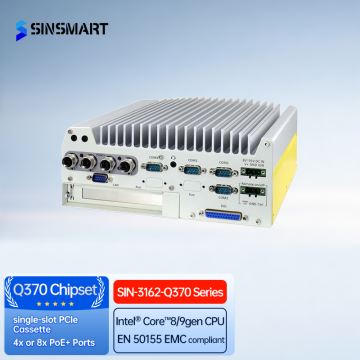
SINSMART: Chinese leading embedded pc manufacturer in rugged fanless solutions
-
Advantech: Global OEM with modular I/O options (epc-c301, mic-770w-20a1, mic-770v3h-00a1, air-030 )
-
OnLogic (Logic Supply): North American brand known for customization
-
Axiomtek / IEI / Cincoze: Proven options in automation and transport




LET'S TALK ABOUT YOUR PROJECTS
- sinsmarttech@gmail.com
-
3F, Block A, Future Research & Innovation Park, Yuhang District, Hangzhou, Zhejiang, China
Our experts will solve them in no time.