
 Rackmount PC
 Embedded Computing
 Industrial Portable Computers
 Rugged Tablets
 Rugged Laptop
 Industrial Panel PC
 Rugged Handheld
 Advantech Industrial PC
Which is more stable, industrial computers or servers?
In the development of modern information technology, industrial computers China and servers play a key role in different fields, and their stability performance is also the focus of many users. This article will compare the stability performance of industrial computers and servers to help readers better understand their performance and applicability in their respective fields.
Table of Contents
- 1. Stability Performance of Industrial Computers
- 2. Stable performance of servers
- 3.How Industrial Computers and Servers Define Stability Differently
- 4. Stability performance comparison
- 5.Why Industrial Computers Are More Stable in Harsh Environments
- 6.Industrial Computers vs Servers in 24/7 Operation
- 7.When Industrial Computers Are a Better Choice Than Servers
- 8.When Servers Are More Stable Than Industrial Computers
- 9.How Industrial Computers Improve Deployment Stability in Real Projects
- 10.Industrial Computers Comparison Table for Buyers
- 11.How to Choose Industrial Computers or Servers for Your Project
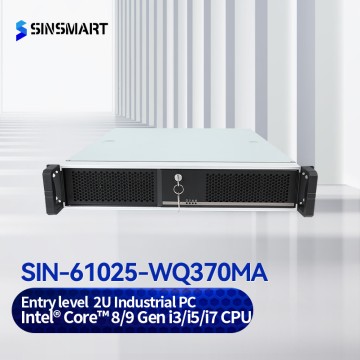
- 12.Why Rackmount Industrial Computers Are Often Chosen Instead of Standard Servers
- 13.Industrial computer and server stability
- 14.Why SINSMART Industrial PCs Are Built for Industrial Deployment
- 15. Conclusion
- 16.FAQ
1. Stability Performance of Industrial Computers
Industrial rack mount pc are computer systems designed for industrial control and automation applications. They will undergo special engineering design and rigorous testing to adapt to harsh industrial environments. They usually use industrial-grade components and reliable system architectures, and have excellent stability performance. For example, components that adapt to the industrial-grade temperature range can operate stably under environmental conditions such as extreme temperature, humidity, vibration, and electromagnetic interference.

In addition, rugged rackmount computer also have dustproof, waterproof, and corrosion-resistant features to cope with complex industrial environments, and are widely used in industrial automation, robot control, transportation and other fields.
2. Stable performance of servers
Servers are high-performance computer systems used to store, manage and provide data and services. Their stable performance is a key factor in ensuring data reliability and business continuity. Servers use high-quality hardware components and reliable redundant designs to provide high availability and fault tolerance. They are usually equipped with multiple power supplies and hard disk redundant arrays (RAID) and other functions to prevent single point failures.

The server also has powerful processing capabilities, high-speed data transmission and network connections to meet the requirements of large-scale data processing and high concurrent access, and is widely used in enterprise-level applications, cloud computing, website hosting and other fields.
3.How Industrial Computers and Servers Define Stability Differently
A major reason buyers get confused is that industrial computers and servers are often judged by the same word: stability. However, the meaning is different in each use case.
For industrial computers, stability usually refers to:
- Stable operation in dust, heat, vibration, and humidity
- Reliable communication with field devices
- Consistent performance over long lifecycle deployments
- Fewer interruptions in edge-side or equipment-side operation
For servers, stability usually refers to:
- Service continuity
- Fault tolerance
- Memory and storage protection
- Centralized uptime for business systems and applications
That means industrial computers and servers are not direct replacements in every scenario. In many projects, they serve different layers of the system. Industrial computers handle control, acquisition, edge processing, and local interface tasks. Servers handle storage, databases, virtualization, and centralized services.
So if you ask which one is more stable, the correct answer is: industrial computers are more stable for harsh industrial deployment, while servers are more stable for centralized computing service continuity.
4. Stability performance comparison
The industrial rack pc is designed for industrial environments, has high anti-interference ability and stability, can adapt to harsh industrial conditions, and can operate reliably in extreme temperature, humidity and electromagnetic interference environments.
The server focuses on data storage, computing and network services, provides high availability and fault tolerance, adopts reliable redundant design to prevent single point failures, and has powerful processing capabilities and high-speed data transmission.

5.Why Industrial Computers Are More Stable in Harsh Environments
Industrial computers are designed for physical reliability in demanding environments. Unlike standard IT hardware, they are built with stronger structural protection, wider operating temperature support, better resistance to dust and vibration, and more flexible industrial interfaces.
In many industrial sites, the computer is installed close to the application itself rather than inside a protected server room. This means the hardware may face continuous vibration from machinery, airborne dust, unstable power conditions, or wide temperature variation. In these cases, environmental adaptability becomes one of the most important aspects of stability.
This is where industrial computers have a clear advantage. Their design focuses on stable operation under real industrial stress, not just on delivering high computing density in an ideal indoor environment. For example, in manufacturing, transportation, energy, and edge control projects, industrial computers are often expected to operate for long hours with minimal interruption and low maintenance frequency.For projects that require reliable edge-side deployment, many buyers first compare different types of embedded industrial computers to evaluate long-term stability, interface flexibility, and environmental adaptability.
According to CONTEC, industrial PCs offer long supply periods, environmental resistance, durability, and suitability for continuous operation, which helps explain why industrial computers are often preferred in long-cycle industrial deployments.
6.Industrial Computers vs Servers in 24/7 Operation
Both industrial computers and servers can support 24/7 operation, but they do so in different ways.
Industrial computers achieve continuous operation through durable design, fanless or optimized thermal control, long-term component consistency, and suitability for field installation. Their strength lies in keeping the system running where conventional commercial hardware may fail.
Servers achieve 24/7 operation through redundancy and platform-level reliability features. These may include ECC memory, RAID storage strategies, redundant power supplies, and server-grade management frameworks. Their strength lies in maintaining service availability in controlled data environments.
If your application is deployed inside a production workshop, control cabinet, vehicle, roadside enclosure, or industrial edge node, the 24/7 advantage often belongs to industrial computers. If your application is hosted in a rack-based IT room and serves many users or enterprise applications, the 24/7 advantage often belongs to servers.
7.When Industrial Computers Are a Better Choice Than Servers
Industrial computers are usually the better choice when the project requires the computing unit to be physically close to the equipment or process.
Typical scenarios include:
- Factory automation
- Machine vision
- Industrial control
- Transportation onboard systems
- Edge gateways
- Outdoor monitoring stations
- Energy and utility sites
- Workshop data acquisition
- Warehouse equipment integration
In these scenarios, the real risk is often not computing power, but failure caused by the environment. A server may be very reliable in a climate-controlled room, but if the project needs the computer to work beside machines, inside cabinets, on moving equipment, or in unstable site conditions, industrial computers are generally more suitable.
Another important reason is lifecycle stability. Industrial projects often require long validation periods and longer procurement cycles. Buyers do not want to keep redesigning or revalidating the platform because hardware changes too quickly. Industrial computers are often better aligned with this requirement.
8.When Servers Are More Stable Than Industrial Computers
Servers are the better choice when the core requirement is centralized service reliability rather than environmental survivability.
For example, if your project involves:
- Virtualization
- Database management
- Centralized storage
- ERP or MES backend systems
- Multiple-user application access
- Cloud-connected workloads
- Large-scale data processing
then server architecture may provide a more stable foundation.
This is because server platforms are designed around availability and fault tolerance at the infrastructure level. Redundant components, remote management, protected memory architecture, and mature rack deployment strategies make servers highly suitable for centralized IT workloads.
So from a buyer perspective, the comparison should not be emotional or generic. It should be based on the exact location of deployment, system role, maintenance model, and consequence of downtime.
9.How Industrial Computers Improve Deployment Stability in Projects
In many industrial deployments, the real cause of instability is not insufficient processing power. It is mismatch between hardware design and field conditions.
Industrial computers improve deployment stability in several ways:
1. Better environmental tolerance:They are more suitable for dusty, vibrating, hot, or humid operating environments.
2. More appropriate industrial I/O:Industrial projects often require COM ports, dual LAN, digital I/O, CAN, or other interfaces that are not standard priorities in many server deployments.
3. Easier near-equipment installation:Industrial computers are designed for wall-mount, DIN-rail, embedded, or rackmount industrial installation, which supports deployment closer to the process itself.
4. Longer platform consistency:This reduces the risk of frequent hardware changes affecting validation, maintenance, or expansion planning.
5. Lower field maintenance burdenThe right industrial computer can reduce maintenance visits, unexpected interruption, and deployment friction across multiple sites.
These advantages are especially important for B-end customers who care about total lifecycle reliability rather than only initial hardware specifications.
10.Industrial Computers Comparison Table for Buyers
Below is a practical comparison table you can use to help customers understand the difference more quickly.
| Comparison Factor | Industrial Computers | Servers |
| Primary stability focus | Stable operation in harsh environments | Stable service continuity in controlled environments |
| Best deployment location | Factory floor, cabinet, vehicle, edge site | Server room, IT rack, data center |
| Resistance to dust and vibration | Stronger | Usually depends on protected environment |
| Temperature adaptability | Better for industrial conditions | Better in controlled indoor conditions |
| Redundancy capability | Depends on model and project design | Usually stronger |
| Storage and virtualization support | Moderate to project-specific | Stronger |
| Industrial I/O flexibility | Strong | Usually weaker for field I/O |
| Lifecycle consistency | Stronger in industrial projects | Depends on enterprise IT cycle |
| Best for | Control, automation, edge computing | Centralized services, storage, enterprise systems |
| More stable when | Environment is harsh and distributed | Workload is centralized and service-driven |
11.How to Choose Industrial Computers or Servers for Your Project
If you are a procurement manager, system integrator, or project engineer, the easiest way to decide is to ask the following questions:
- Where will the system be deployed:If it will be installed in a harsh or semi-harsh industrial environment, industrial computers are usually the better choice.
- What kind of workload does it handle:If the role is control, edge acquisition, local processing, or equipment integration, industrial computers are often more suitable. If the role is centralized computing or storage, servers may be better.
- What causes more risk in your project:If environmental interruption is the bigger risk, choose industrial computers. If service-level downtime and data continuity are the bigger risk, choose servers.
- Does the project need long hardware consistency:If yes, industrial computers often offer a better fit for long-term industrial deployment planning.
- Is redundancy the top priority:If your system depends heavily on redundant storage, protected memory, and centralized uptime architecture, a server may be more appropriate.
In many modern projects, the answer is not industrial computers or servers. It is industrial computers at the edge and servers at the center.
12.Why Rackmount Industrial pcs Are Chosen
In some projects, buyers do not actually need a standard server. What they need is a system that combines industrial durability with rack-based installation. That is where rackmount industrial computers become highly valuable.
Rackmount industrial computers provide a practical middle ground. They keep the structured installation format that many buyers want, while also offering more industrial adaptability than a conventional server-first solution.
This makes them suitable for:
- Factory control rooms
- Industrial data acquisition
- Machine vision platforms
- MES connection points
- Inspection systems
- Transportation control
- Power and utility cabinets
For buyers who need rack installation but also need better industrial reliability, rackmount industrial computers are often the smarter choice.If your application needs structured rack installation with better adaptability to industrial environments, these industrial rackmount computers can be a more practical choice than standard server-first hardware.
13.Industrial computer and server stability
From an SEO and content credibility perspective, third-party support is important because it helps reinforce that this comparison is based on industry logic, not only brand opinion.
For example, CONTEC emphasizes that industrial PCs are designed with long supply periods, durability, environmental resistance, and continuous operation in mind. This supports the idea that industrial computers are often the better choice where hardware must remain stable under site-level stress.
At the same time, Intel highlights server reliability from the perspective of RAS features, ECC protection, and improved uptime in server environments. This supports the idea that servers are more suitable when centralized service continuity is the main goal.
14.Why SINSMART Industrial PCs Are Built for Industrial Deployment
At SINSMART, we do not approach stability as a generic IT concept. We understand that for industrial customers, stability means the ability to keep systems running in real operating conditions over time.
SINSMART industrial computers are designed for industrial deployment needs such as:
- Continuous operation
- Industrial interface support
- Flexible configuration
- Long-term use planning
- Rugged structural design
- Deployment in manufacturing, transportation, energy, logistics, and other demanding sectors
For enterprise buyers, that means a more realistic fit between hardware and application. Instead of overbuying server architecture for edge-side workloads, or underestimating environmental risk with commercial hardware, you can choose a platform that aligns better with actual industrial use.
Where needed, SINSMART also supports customization in CPU selection, memory, storage, I/O, wireless communication, and project-specific integration. This can help reduce mismatch risk and improve overall deployment reliability.
15.Conclusion
Both IPCs and servers have excellent stability, but they are suitable for different application fields. IPCs show high stability in the field of industrial control and automation, and are adaptable to harsh industrial environments and extreme conditions; while servers, such as 1U rack PCs and 2U rack mount computers, show stability and reliability in enterprise-level applications such as data storage, computing, and network services. For industrial applications, a reliable option like an industrial PC 4U can offer enhanced performance in extreme conditions.
16.FAQ
1. Are industrial computers more stable than servers in factories?
Yes, in most factory-side deployments, industrial computers are more stable because they are designed for dust, vibration, temperature variation, and long operating hours near equipment.
2. Are servers better than industrial computers for centralized IT workloads?
Yes. Servers are usually better for centralized services such as databases, virtualization, storage, and enterprise applications because they focus more on redundancy and service continuity.
3. Can industrial computers run 24/7?
Yes. Many industrial computers are designed for continuous operation, especially in automation, edge computing, transportation, and industrial monitoring applications.
4. Why are industrial computers often used at the edge?
Industrial computers are often used at the edge because they can operate closer to machines and field processes while tolerating harsher environmental conditions than standard IT hardware.
5. Are industrial computers suitable for data centers?
Not usually as a direct replacement for standard server infrastructure. Industrial computers are more suitable for equipment-side, edge-side, or site-level deployment rather than centralized data center roles.
6. Do industrial computers support long-term industrial projects better?
In many cases, yes. Industrial computers are often preferred in long-cycle industrial projects because buyers value hardware consistency, lifecycle stability, and reduced redesign risk.
7. What is the biggest stability advantage of servers?
The biggest advantage of servers is centralized uptime architecture, including redundancy, protected memory strategies, and infrastructure-level fault tolerance.
8. What is the biggest stability advantage of industrial computers?
The biggest advantage of industrial computers is reliable operation in harsh deployment environments where vibration, dust, heat, and site conditions are major risks.
9. Should a project choose industrial computers or servers for machine vision?
If the system is deployed close to the production line or camera equipment, industrial computers are often the better choice. If the project needs centralized storage or large-scale backend processing, servers may also be used together.
10. Can industrial computers and servers be used together?
Yes. In many industrial architectures, industrial computers handle local control or edge computing, while servers handle centralized storage, management, and enterprise services.




LET'S TALK ABOUT YOUR PROJECTS
- sinsmarttech@gmail.com
-
3F, Block A, Future Research & Innovation Park, Yuhang District, Hangzhou, Zhejiang, China
Our experts will solve them in no time.